
Plenary talks
MMAR 2026 plenary lecturers
| Naomi Ehrich Leonard Princeton University, USA Neuro-inspired Dynamics for Fast, Flexible, and Frugal Multiagent Decision-Making and Control |
| Shihua Li Southeast University, China Recent Advances on Disturbance Rejection Control for Mechatronic and Robotic Systems |
| Ying Tan University of Melbourne, Australia Learning Control and Its Application in Rehabilitation Robotics |
| Paweł Strumiłło Lodz University of Technology , Poland Electronic Personal Navigation Systems for Blind People |
Naomi Ehrich Leonard
 |
Naomi Ehrich Leonard is Chair and Edwin S. Wilsey Professor of Mechanical and Aerospace Engineering, associated faculty with the Program in Applied and Computational Mathematics and the Biophysics Graduate Program, and affiliated faculty with the Princeton Neuroscience Institute and the Center for Statistics and Machine Learning at Princeton University. She is Founding Director of creativeX, a Princeton engineering-and-the-arts collective, and Founding Editor of Annual Review of Control, Robotics, and Autonomous Systems. Leonard received her B.S.E. in Mechanical Engineering from Princeton University in 1985 and her Ph.D. in Electrical Engineering from the University of Maryland in 1994. She is a MacArthur Fellow, member of the American Academy of Arts and Sciences, Fellow of the ASME, IEEE, IFAC, and SIAM. Recents awards include the 2023 IEEE Control Systems Award, the 2024 Richard E. Bellman Control Heritage Award, and the 2025 IEEE George S. Axelby Outstanding Paper Award. Her current research focuses on dynamics, control, and learning for multiagent systems on networks with application to multi-robot teams, collective animal behavior, and other networked systems in technology, nature, and the arts. |
Shihua Li
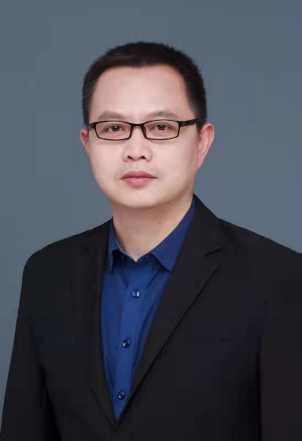 |
Shihua Li received his bachelor, master, Ph.D. degrees all in Automatic Control from Southeast University, Nanjing, China in 1995, 1998 and 2001, respectively. Since 2001, he has been with School of Automation, Southeast University, where he is a Chief Professor, Jiangsu Specially Appointed Professor, dean of School of Automation. He is the chairman of IEEE IES Nanjing Chapter, Fellow of IEEE, IET, AAIA and CAA. He is also the Director General of Jiangsu Association of Automation. His main research interests include modeling and nonlinear control theory with applications to mechatronic systems. He has published 3 monographs, over 300 international journal and conference papers with 38000+ citations (Google Scholar). He is one of Clarivate Analytics Highly Cited Researchers all over the world in 2017-2024. He is a winner of the 6th Nagamori Award in 2020. |
Ying Tan
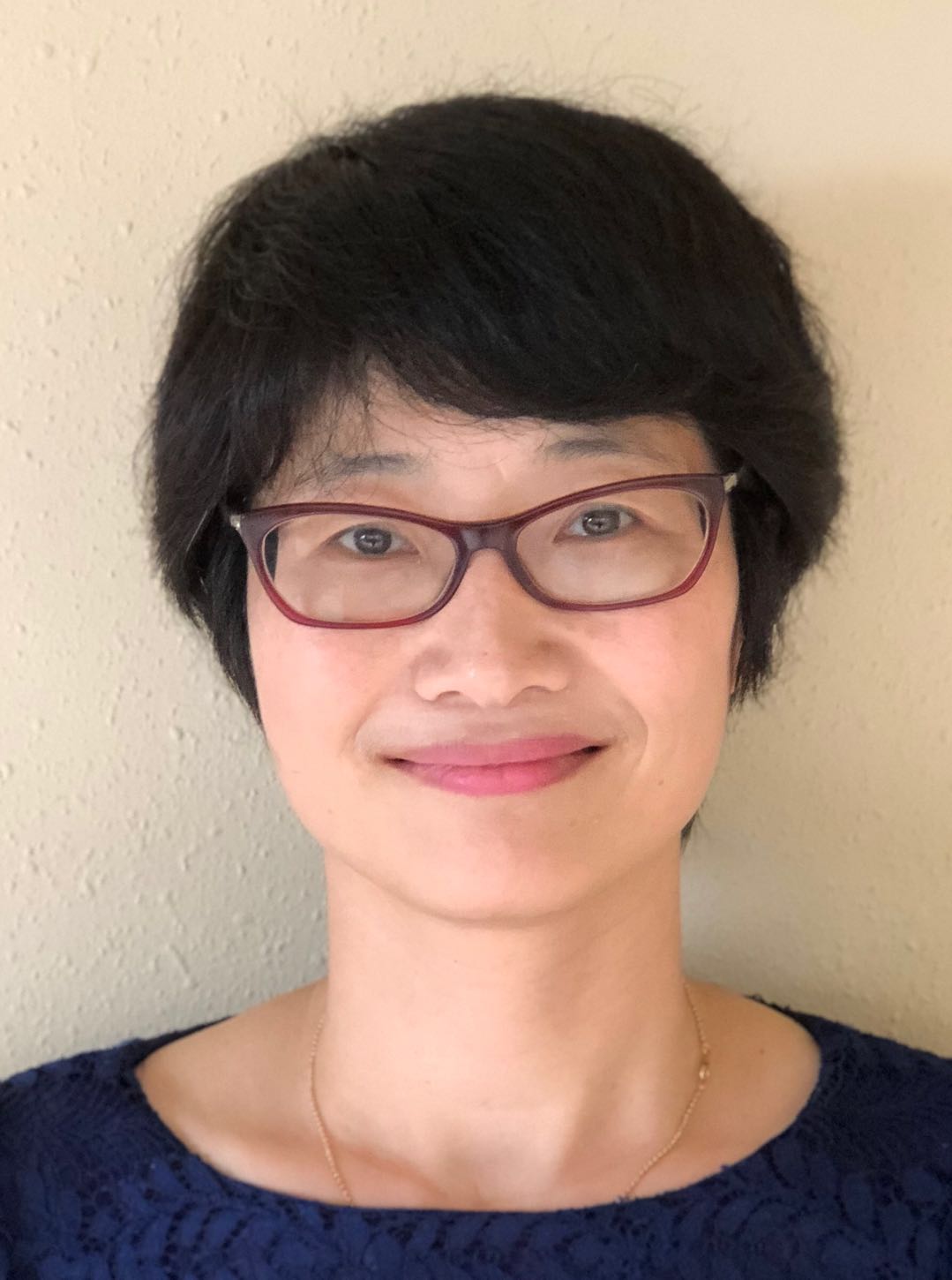 |
Dr. Ying Tan is a Professor of Mechanical Engineering at The University of Melbourne, Australia. She earned her bachelor’s degree from Tianjin University, China, in 1995, and her PhD from the National University of Singapore in 2002. Following a postdoctoral fellowship at McMaster University, she joined The University of Melbourne in 2004. Dr. Tan has received numerous prestigious recognitions, including an Australian Postdoctoral Fellowship (2006–2008) and an ARC Future Fellowship (2009–2013). She currently serves on the ARC College of Experts (2024–2026) and holds several distinguished titles, including Fellow of IEEE (FIEEE), Fellow of Engineers Australia (FIEAust), and Fellow of the Asia-Pacific Artificial Intelligence Association. She is also a member of the IEEE Fellow Committee (2024–2025) and was recently elected Fellow of the Australian Academy of Technology and Engineering (ATSE, 2025), an honor recognizing her outstanding contributions to engineering and applied science in Australia. Her research spans intelligent systems, nonlinear systems, data-driven optimization, rehabilitation robotics, human motor learning, wearable sensors, and model-guided machine learning. |
Paweł Strumiłło
 |
Paweł Strumiłło received an MSc in Electronic Engineering from the Lodz University of Technology (TUL) in Poland in 1983, and a PhD from the University of Strathclyde in the United Kingdom in 1993. He was awarded the title of professor in 2013. He has published over 100 scientific articles and three books on biomedical signal and image analysis, computational intelligence, and human–computer interaction systems. Recently, he has worked on creating assistive systems for blind people. This work has been recognised by the Polish Agency for Enterprise Development and has been commercialised in collaboration with Orange Labs. Prof. Strumiłło has been a visiting professor at the University of Oslo. Since 2015, he has been the Director of the Institute of Electronics. From 2020 to 2025, he was vice-rector for development at TUL. He is a Senior Member of the Institute of Electrical and Electronics Engineers (IEEE) and serves on the committees of the Polish Academy of Sciences. He is chairman of the Łódź ICT Cluster and the Municipal Computer Network in Łódź City. He is a member of the Main Council for Science and Higher Education in Poland. |